
News – Articles – Reports
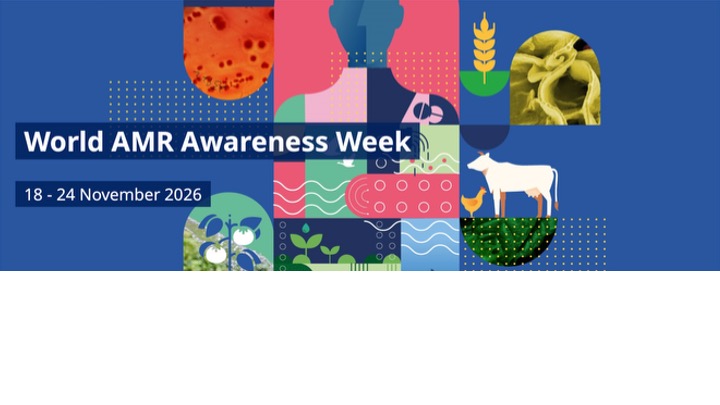
NaCoMi marks World AMR Awareness Week (WAAW),18-24 November 2026
In recognition of World AMR Awareness Week (WAAW), NaCoMi is proud to join the global community in raising awareness about antimicrobial resistance (AMR), one of the most significant health challenges of our time. The World AMR Awareness Week is an annual global campaign held from 18-24 November to improve awareness and understanding of antimicrobial resistance and promote coordinated action across the One Health sectors. See also the Belgian Federal Public Services: see French and Dutch sites. Behind these efforts are dedicated researchers, healthcare professionals, public health experts, policymakers, and community partners who are committed to understanding and addressing AMR.In Belgium, researchers contribute to this collective mission by generating the evidence needed to better understand how resistance emerges and spreads, and by helping to develop solutions that can improve health outcomes for people and communities. Together with its partners and network, NaCoMi is dedicated to fostering responsible antimicrobial use and working collaboratively to advance meaningful solutions to combat AMR. This World AMR Awareness Week, we invite everyone to be part of the solution. Whether you are a healthcare worker, researcher, student, policymaker, or community member, your actions matter. By using antimicrobials responsibly, supporting infection prevention measures, sharing knowledge, and advocating for evidence-based practices, we can all help slow the spread of resistance.
British Society for Parasitology (BSP) and the Institute of Tropical Medicine (ITM)
BSP and ITM are happy to announce a 4 days seminar entitled: Trypanosomiasis & Leishmaniasis seminar: From the field to the lab for the field. Tuesday 14 to Friday 17 September 2027. Venue: Institute of Tropical Medicine, Antwerp, Belgium. Organizers: MA Domagalska, J Van Den Abbeele and JC Dujardin. The program includes two keynotes and eight sessions covering different aspects of the parasites’ biology. Invited guest speakers of all sessions confirmed their participation (titles of talks will follow). We expect per session one invited speaker, three talks and the best posters will be advertised by turbo-talks. A particular attention will be given in each session to mix Trypanosomes and Leishmania, for promoting cross-fertilization.
The Young Belgian Society for Microbiology
The Young Belgian Society for Microbiology proudly celebrates International Microorganisms Day at the Royal Belgian Institute of Natural Sciences on Open Monument Day, September 17th 2026.Venue: Rue Vautier 29, 1000 Brussels. The Young Belgian Society for Microbiology (YBSM) is part of The Belgian Society for Microbiology (BSM).
Académie royale de Médecine de Belgique – ARMB News N°1 (April 2026)
View the ARMB here. View the full issue in your browser here
A Look Back at the One Health Symposium (May 25–28, 2025, Brussels)
Professor Jacques Mahillon and Professor Etienne Thiry
For the Organizing Committee, respectively President and Secretary of the National Committee for Microbiology (NaCoMi) of the Royal Academies of Belgium.
The Palace of the Academies hosted, from May 25 to 28, 2025, a symposium entitled: One Health in Focus: Advancing Solutions to Antimicrobial Resistance, in conjunction with the second international conference on bacteriocins.
This event was organized by the National Committee for Microbiology (NaCoMi) and celebrated the 100th anniversary of the discovery of bacteriocins by André Gratia, a member of the Royal Academy of Medicine.
This meeting brought together approximately 140 experts to discuss the major challenges of antimicrobial resistance, focusing on:
- A One Health approach encompassing human, animal, and environmental health
- New technologies and innovations to combat antimicrobial resistance
- Regulatory and strategic challenges
Following two introductory presentations on the scientific and societal dimensions of this issue on Sunday, May 25, Monday was dedicated to the diverse aspects of Antimicrobial Resistance (AMR), in both human and animal health, as well as in agriculture, the environment, and food safety. Tuesday was devoted to presentations on current and future strategies being implemented to address these challenges. The final day focused more specifically on bacteriocins, in the context of the 2nd Bacteriocin International Conference (BIC2025). On this occasion, and as an introduction to the day, Prof. André Gratia's family was represented by six people, including one of his sons, Jean-Pierre Gratia, who honored us by sharing some memories and anecdotes about his father.
This symposium allowed participants to share expertise across research fields that are generally quite different (for example, agriculture and human health) but which face the same "AMR" challenges within a global health context. Furthermore, the presence of representatives from Belgian institutions (AMCRA, Sciensano), international organizations (EFSA, FAO, European Commission - DG HERA), and private companies added an important societal dimension to these meetings.Among the 44 speakers, 20 were non-Belgian (European or Canadian). Five young researchers also had the opportunity to present short talks on their recent research activities.
This conference benefited from several sponsors, both private and public, which ensured free participation for all speakers, as well as reimbursement of travel and accommodation expenses for international speakers. Finally, an online evaluation indicated a very high level of satisfaction among participants of this unique scientific and societal event.