
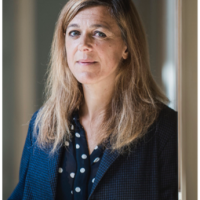
Karine Van Doninck
Laboratory of Molecular Biology & Evolution, ULB, Brussels
Title: Evolving without males, while having adapted to extreme stresses
Bio Sketch
Karine Van Doninck is an evolutionary biologist, inspired by science and art but also by urban development, dedicated to push the frontiers of knowledge, while exploring and blurring the boundaries between disciplines. As a full professor in biology at Université Libre de Bruxelles (ULB), Van Doninck combines twin passions of research and education. In 2020, she founded the research unit of Molecular Biology and Evolution at ULB. Central to her research are micro-organisms called bdelloid rotifers. For her research, she received the award of a European Research Council (ERC Consolidator) grant in 2017 and an European Space Agency (ESA) project, both to more deeply study and understand rotifers. Two experiments have already been launched by SpaceX to the International Space Station. Besides her dedication to scientific research and education, Karine Van Doninck also likes to explore the interplay between art & science. (photograph by Karel Duerinckx)
Abstract
Bdelloid rotifers are microscopic animals notorious for having lost males and canonical sexual reproduction. This paradox is often counterbalanced by their remarkable ability to survive extreme genome damage caused by desiccation and ionizing radiation, having colonized a broad range of semi-terrestrial habitats. Our research group, through an ERC-funded project, has been investigating how bdelloid rotifers survive both the challenges of asexuality and the biological toll of extreme stresses. Using an integrated approach combining omics data, molecular biology and cytological analyses, we focused on the model species Adineta vaga. We discovered that A. vaga undergoes a non-reductional meiosis. While their six homologous chromosomes do pair and recombine, the first meiotic division is abortive, and the homologous chromosomes do not segregate. Strikingly, DNA repair in the germline is delayed until this stage of oogenesis, allowing homologous recombination-based repair of radiation-induced damage. In contrast, DNA repair in somatic cells is rapid and occurs shortly after DNA damage. Our experimental evolution study revealed megabase scale losses of heterozygosity at genome level, confirming the occurrence of meiotic homologous recombination. Unexpectedly, we also detected large-scale duplications and deletions, and the propagation of broken chromosomes across generations, that gets progressively repaired through a novel transgenerational DNA repair mechanism based on extended homologous recombination repair. Therefore, despite the loss of sex, their simplified meiosis, together with the presence of holocentric chromosomes, has made bdelloid rotifers more resilient to aneuploidy. Interestingly, bdelloid rotifers have also accumulated horizontally transferred genes (HTGs) of non-metazoan origin, particularly in sub-telomeric regions. Some of these genes, such as Ligase E, play key roles in their stress tolerance. Bdelloid rotifers are not only innovative at repairing DNA but have also evolved robust protein protection systems and resistance to oxidative stress. Altogether, bdelloid rotifers exemplify innovative evolutionary strategies that enable long-term survival without sex and in the face of extreme environmental challenges.